
Overview
Cerebral palsy is caused by damage to the motor control centre of young developing brain. Cerebral palsy is divided into four major classifications.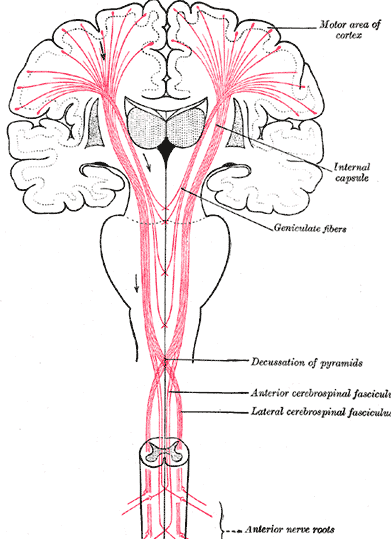
Anatomy of the Brian and Spinal cord. Image courtesy of https://en.wikipedia.org/wiki/File:Gray764.png
under the the terms of the GNU Free Documentation License.

- Spastic
- Dyskinetic
- Ataxic
- Mixed
In 30% of all cerebral palsy cases, the spastic form of cerebral palsy society is found along with one other type of cerebral palsy.
Spastic:
This type of cerebral palsy occurs in around 70% to 80% of all people with CP (cerebral palsy). People with this type of CP have increased muscle tone. Their muscles are usually stiff (spastic) and their movements are often jerky or awkward. This neuromuscular condition is caused by damage to the corticospinal tract or the motor cortex in the brain. Spastic CP is further classified by which part of the body is affected, these include:
Spastic hemiplegia:
This CP causes a deficit in one side of the body. This damage occurs due to one half of the brain being affected so therefore, an injury to the left side of the brain will cause a right body deficit and vice versa. Generally, people with this type of CP are able to walk although they have a permanent extension of the foot on the affected side.
Spastic diplegia:
People with this type of CP usually have their low extremities affected more than their upper extremities. Most people with diplegia eventually walk although with a crouched gait. Other common side effects and problems include strabismus (crossed eyes), dislocations and hip problems.
Spastic quadriplegia:
People with this type of CP have the whole body with all the four limbs affected. A common problem for people with quadriplegia is a build up of fluid in the spine caused by leakage of the dead cells. This pressure is monitored and usually decreased through medications such as diuretics and steroids. Another symptom for people suffering with this CP is hemiparetic tremors, which cause uncontrollable shaking causing impairment of the normal body movement.
Other types of CP include:
Dyskinetic:
People with this type of CP usually have uncontrolled body movements which are slow and writhing. The movements can affect any part of the body including face, mouth and tongue. This CP occurs in around 10-20 % of all people with CP. The damage occurs to the pyramidal tract and to basal ganglia and/or extrapyramidal motor system.
Ataxic:
People with this type of CP have difficulty with movements that are quick or require control such as writing and typing. Ataxic CP also affects balance, coordination and depth perception. About 10% of CP cases are of this type.
Mixed:
People that suffer with this type of CP have a combination of different cerebral palsy. One combination that is common among CP sufferers is spastic and dyskinetic cerebral palsy.