Introduction
Cerebral palsy (CP) is a set of disorders that cause physical disability in human development. It is a condition that affects body movement, balance and posture. It is a non-progressive and non contagious disorder which can affect people in many different ways.
According to Scope, the disability organisation for people with cerebral palsy, it is believed that about one in every 400 children is affected by cerebral palsy. It also states that around 1,800 babies are diagnosed with this condition in Great Britain each year. It can affect people from all different social backgrounds and ethnicity.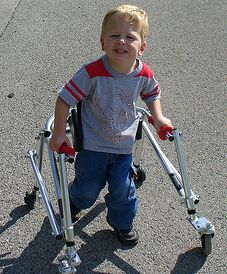
Image courtesy of flickr: https://www.flickr.com/photos/56833981@N00/260912724/ under the common creative license law
Cerebral palsy is caused by damage and abnormal development in parts of the brain that control muscle tone and movement. These impairments first appear early in life and may not be seen until early childhood. Infants that are diagnosed with CP are usually slow to reach developmental milestones such as rolling over, sitting, crawling and walking.
In addition, all individuals with CP have difficulty in controlling and coordinating muscles. This makes even simple movements difficult.Muscle stiffness, poor muscle tone, posture, balance and coordination are the most common problems with CP sufferers. Other problems that are also linked to cerebral palsy include mental retardation, seizures, breathing problems, skeletal deformities, digestive problems, and vision and hearing problems.
Banner image courtesy of flickr: https://www.flickr.com/photos/lafleur/408624040/ under the common creative license law
